
How to Find Who Owns a Clay County Property
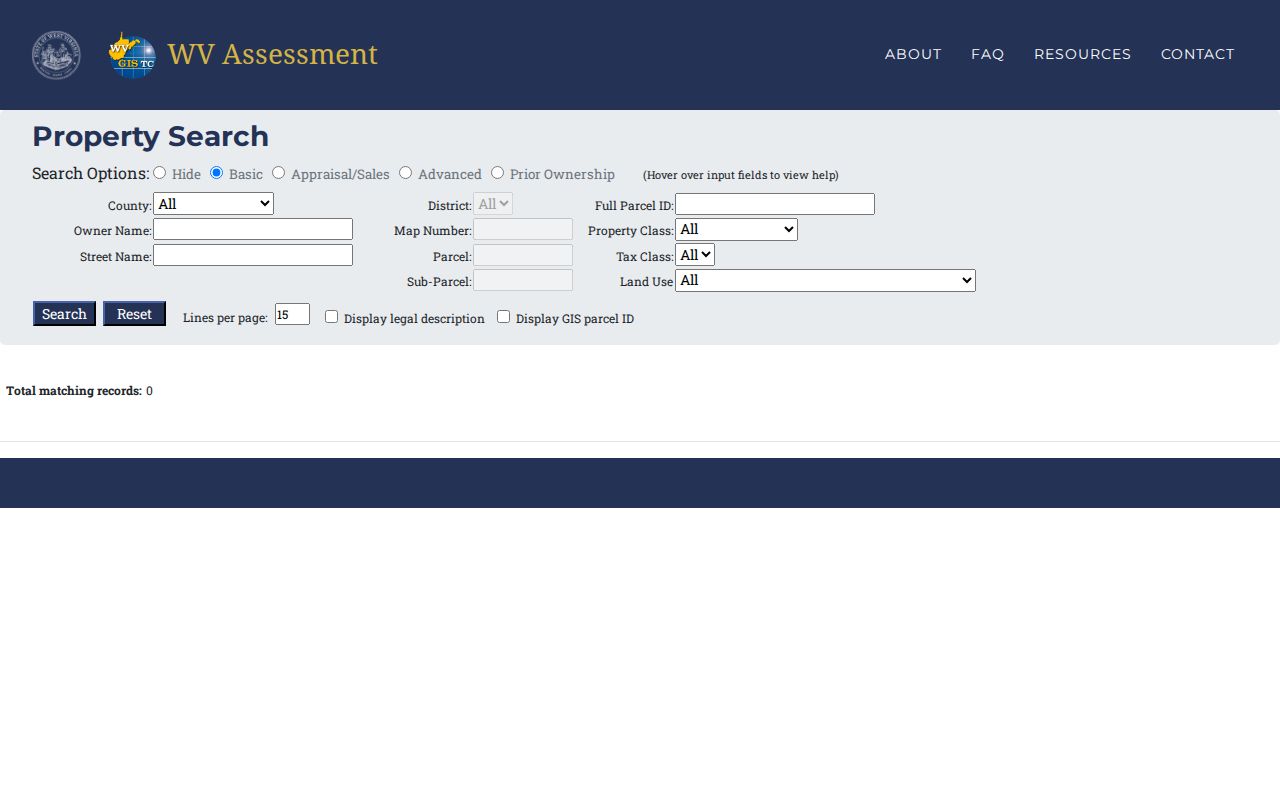
Begin with whatever detail you actually have. A street address works well for a house in town. Rural tracts are often easier to pin down by district, map, and parcel number. The statewide Property Assessment Search lets you filter by county, district, owner, street, parcel, tax class, deed book, deed page, legal description, mailing address, and ranges of land, building, and total appraisal. Results name a current owner and property address. They also return full parcel details. Check the match against the map. A name or address alone may not mark the exact tract.
- Search the address, owner, or parcel in the West Virginia Property Assessment Search and note the owner of record and full parcel identifier.
- Use the County Clerk's grantor and grantee records to locate the latest deed and confirm the names and vesting stated in the instrument.
- If the named grantee is a business, search the West Virginia Secretary of State's business records where available; the entity name itself remains the deed owner.
- Use the owner mailing address only for appropriate property-related contact. Do not assume it is the property's street address.
The assessor's public search page describes its results as statewide and built on property assessment fields.
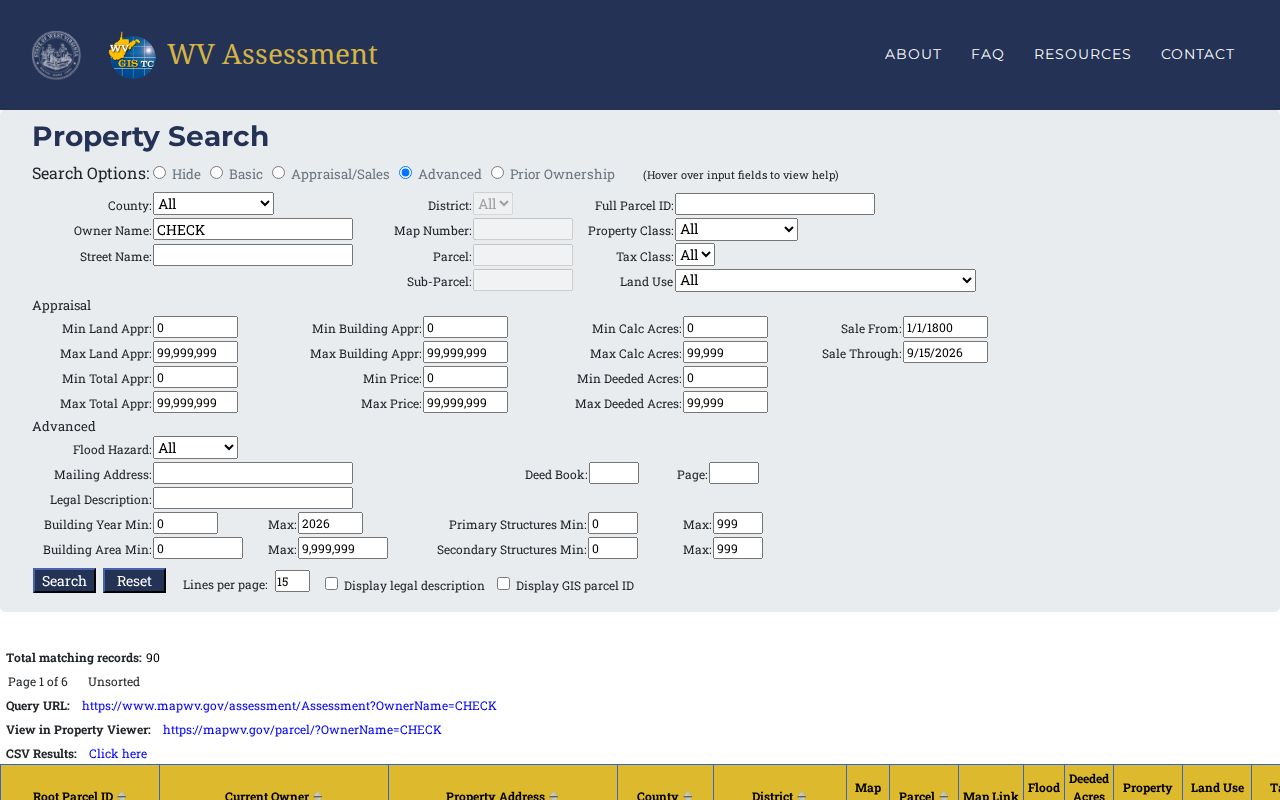
A sample result displays owner, property address, parcel identifiers, and appraisal columns in the statewide results table. That example is not a Clay County listing.
For an entity owner, start at the Secretary of State's business entity search page. It may return nothing. A failed search does not establish ownership, so confirm the grantee name on the deed and request entity details from the state if needed.
Clay County Assessor and Deed Owner Records
The Assessor and the County Clerk do different jobs. The Assessor keeps annual valuations and the assessment roll. That roll is the easiest place to find the owner name tied to a parcel. The County Clerk records deeds and maintains the land-record index. A deed names grantor, grantee, instrument, and legal description. Use the assessment record to locate the parcel, then the deed to verify the recorded conveyance.
No countywide online deed-index portal exists. Contact the Clerk for the current index search. The office sits at 246 Main Street, P.O. Box 190, Clay, WV 25043; call 304-587-4259. Its records include deeds, probate filings, and related papers.
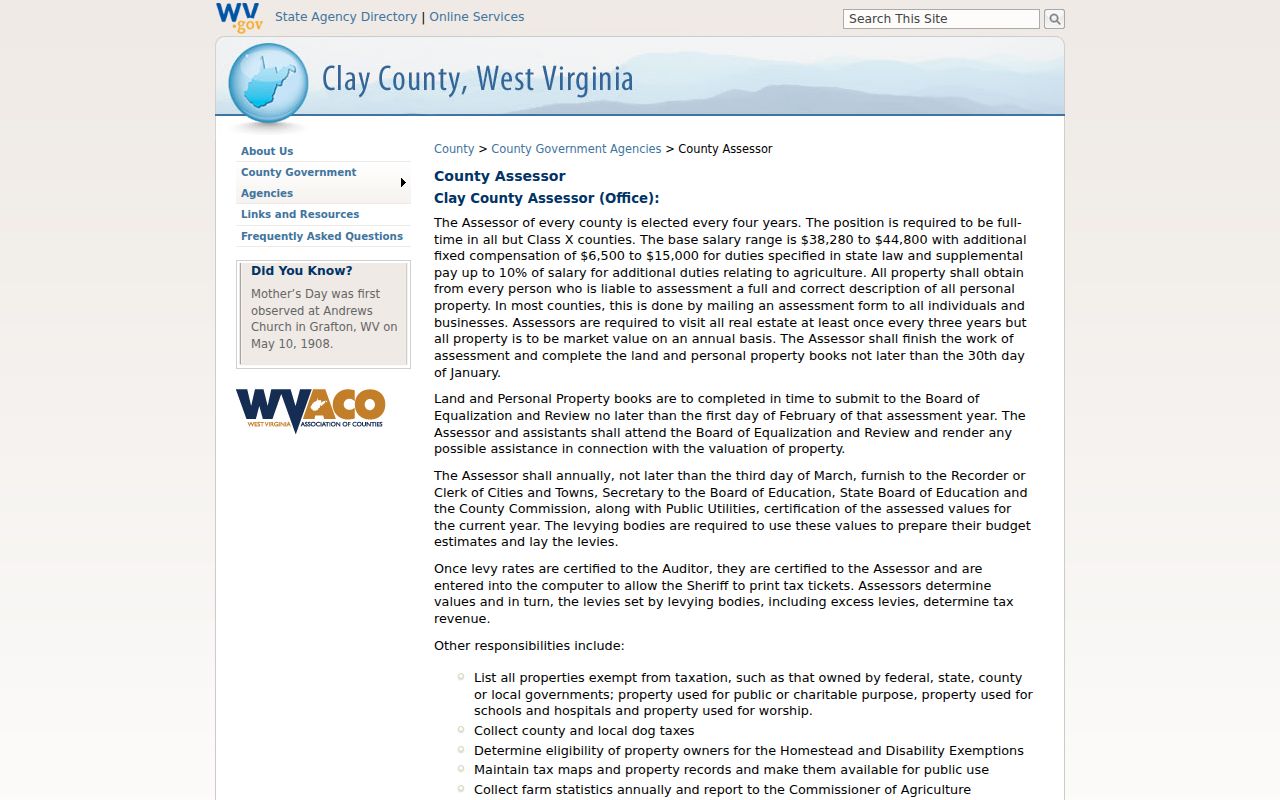
The Clay County Assessor's official page outlines its assessment duties and how to reach the office.
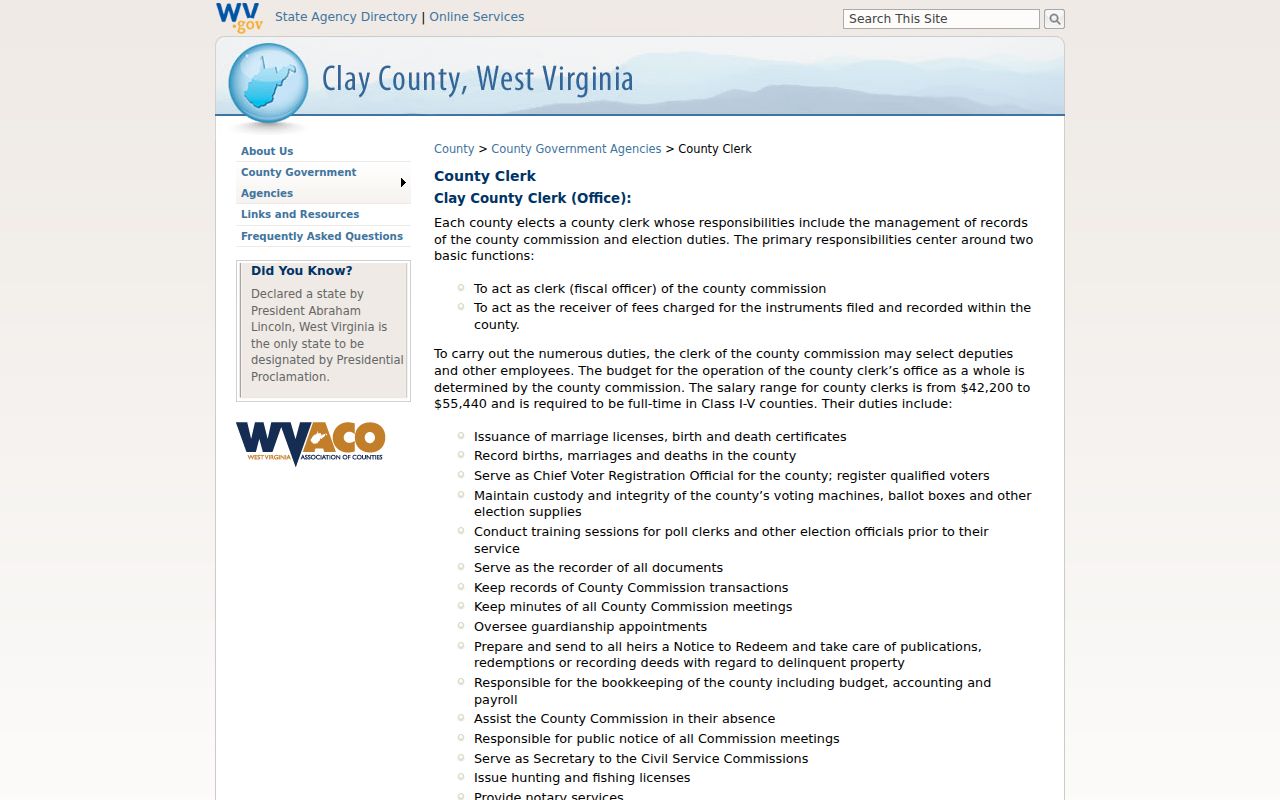
The Clay County Clerk's official page describes the office's recordkeeping duties and contact information.
Owner Names, Mailing Addresses, and Occupants
An owner of record is the name appearing in the public property records. That name may not be the resident. The occupant may be someone else entirely. Tax records can carry a separate mailing address for notices, but treat that address as a data field, nothing more. Rentals, trusts, estates, and freshly transferred parcels all show gaps between the owner, the occupant, and the person managing the land.
When two names appear, read the deed's vesting language rather than guessing at how title is held. A trust may appear by its formal name. A limited liability company may be the grantee. An estate transfer may identify a personal representative or the heirs. The assessor's short display name may omit context. The recorded instrument usually carries more. Keep exact spellings, middle initials, suffixes, and business designators when you search a name.
Where Clay County Owner Information Comes From
Different public records carry different ownership evidence. No single search field gives a full title history. Use the table to pick a next source, and keep the parcel number handy so records can be matched.
| Source | Owner Info It Gives | Access |
|---|---|---|
| Assessor / assessment roll | Owner name, mailing address, parcel identifiers, and valuation fields | Free statewide assessment search |
| County Clerk deed records | Grantor, grantee, instrument and legal-description details | Ask the Clerk about local index and book access |
| Secretary of State | Business-entity filings and registered-agent information when the owner is an entity | Search state business records; confirm the deed's exact entity name |
| GIS parcel viewer | Mapped parcel, owner display, physical address, and assessment links | Free statewide map viewer |
Filters in the assessment search cover county, district, full parcel identifier, owner name, map, parcel, property class, street, mailing address, deed book and page, and legal description. Results can include the root parcel ID, current owner, property address, county and district, map and parcel, deeded acres, class and land-use code, tax class, and land, building, and total appraisal. That is a lot of detail. It helps you identify the right record. It does not certify ownership. A displayed owner may not be the only party with an interest in the property. Confirm through the deed when stakes are high.
How Recently Changed Clay County Ownership Appears
Assessment records move on an annual cycle. Deeds are recorded as instruments arrive. The two systems can lag on a fresh transfer. The statewide viewer's help material says parcel data update yearly and warns that parcel lines are not surveys. A just-recorded deed may still be missing from the assessment result. Contact the Clerk to confirm recording, and ask the Assessor when its roll will reflect the change.
For an odd result, compare parcel identifiers, legal descriptions, and dates. An address may postdate an older deed. One property can hold several tax parcels. A map match alone does not prove the latest deed covers every parcel on screen.
What "Who Owns This Property" Cannot Tell You
A public owner lookup has clear limits. It names the recorded or assessed owner of record, nothing more. That answer does not confirm who actually lives at the property. It also does not supply private contact details. It cannot establish every lien, easement, or competing claim tied to the parcel. West Virginia law balances public access to property records against recognized exemptions for certain information. The state's Address Confidentiality Program gives eligible participants a substitute address for qualifying records. Never try to work around a protected address. Do not use a parcel lookup to expose where a protected person lives.
Lawful use. Use property records for legitimate ownership research, transactions, history, and official business. Do not use names or mailing addresses to threaten, harass, or intimidate anyone; respect applicable privacy protections.