
The Values on a Clay County Property Record
Search Clay County property records through the state Property Assessment Search and you get land, building, and total appraisal figures. Property-class, land-use, tax-class, and acreage fields sit alongside them. One record can hold several numbers called a value. Read the labels carefully. Keep the assessment date attached to any figure you compare. The Assessor's annual valuation draws on market information for the roll. A sale price belongs to one specific transaction, and a private appraisal answers a different question entirely.
| Value | What It Is | Where |
|---|---|---|
| Assessed value | Generally 60 percent of appraised value for property assessment purposes | Assessment roll and tax calculation |
| Appraised value | Assessor's market-value estimate, displayed as land, building, and total fields | State assessment search |
| Last sale price | Price stated for a specific recorded transfer when available | Recorded deed and assessment data |
| Land and building | Separate components that together contribute to total appraisal | Assessment result details |
West Virginia appraises property at market value. It then assesses it at 60 percent of that amount. An assessed figure is not the cash price you should expect in a sale. Buyers and sellers agree on price based on condition, access, improvements, demand, and financing. A mass appraisal does not capture all of that. Treat any reported sale the same way. Check its parcel and date before using it as a benchmark. The state assessment search sample shows how the result table separates owner, property, land, and building fields. The result table also separates total appraisal fields.
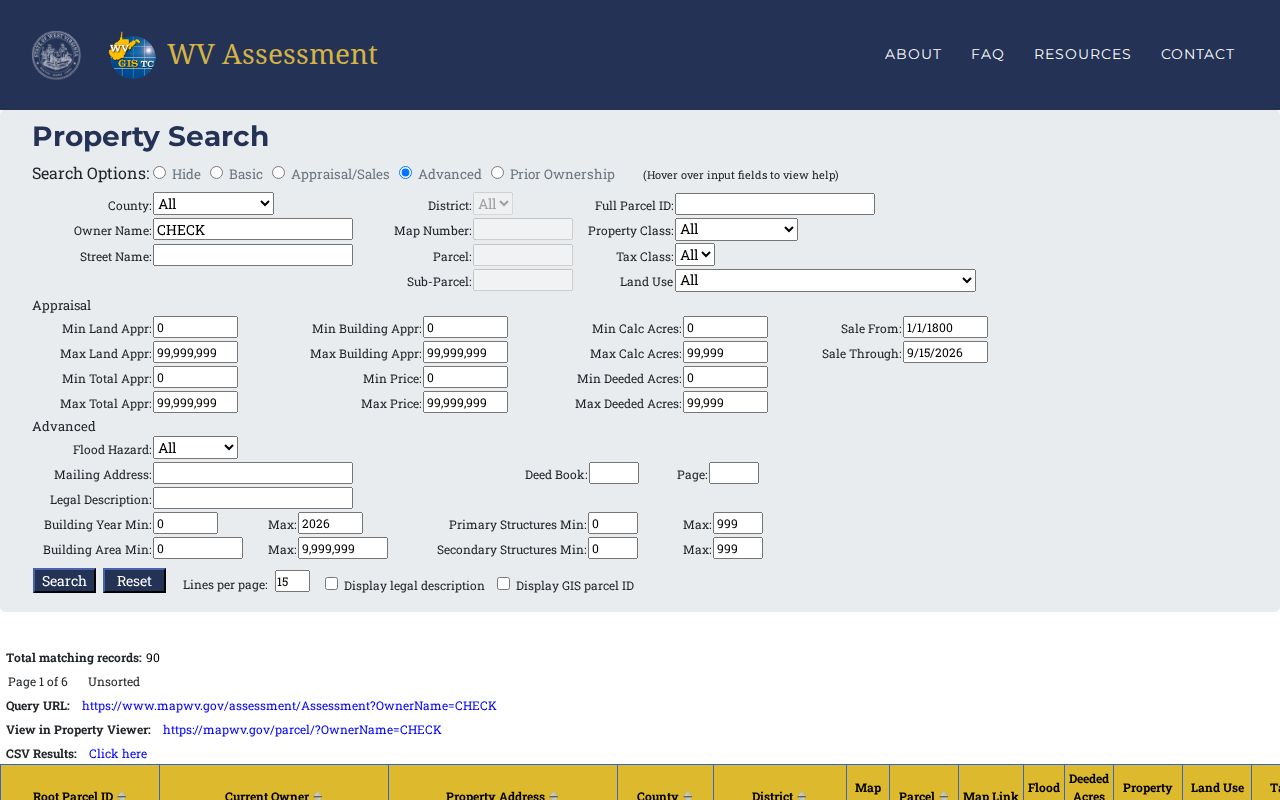
The example is a statewide sample. It should not be cited as a Clay County sale or parcel valuation.
Annual Clay County Property Appraisal Cycle
Clay County Assessor Teresa Davis says her office values property every year. Generally, her staff visits each property at least once every three years. Assessment books close January 30, and values are certified March 3. A three-year visit cycle does not freeze the number. The office uses available information to keep the annual roll current. Improvements, acreage, use, or ownership may have changed. Compare the record against what is actually on the land. Then ask the Assessor about a correction or review. The Assessor's official office page describes its value formula and workflow.
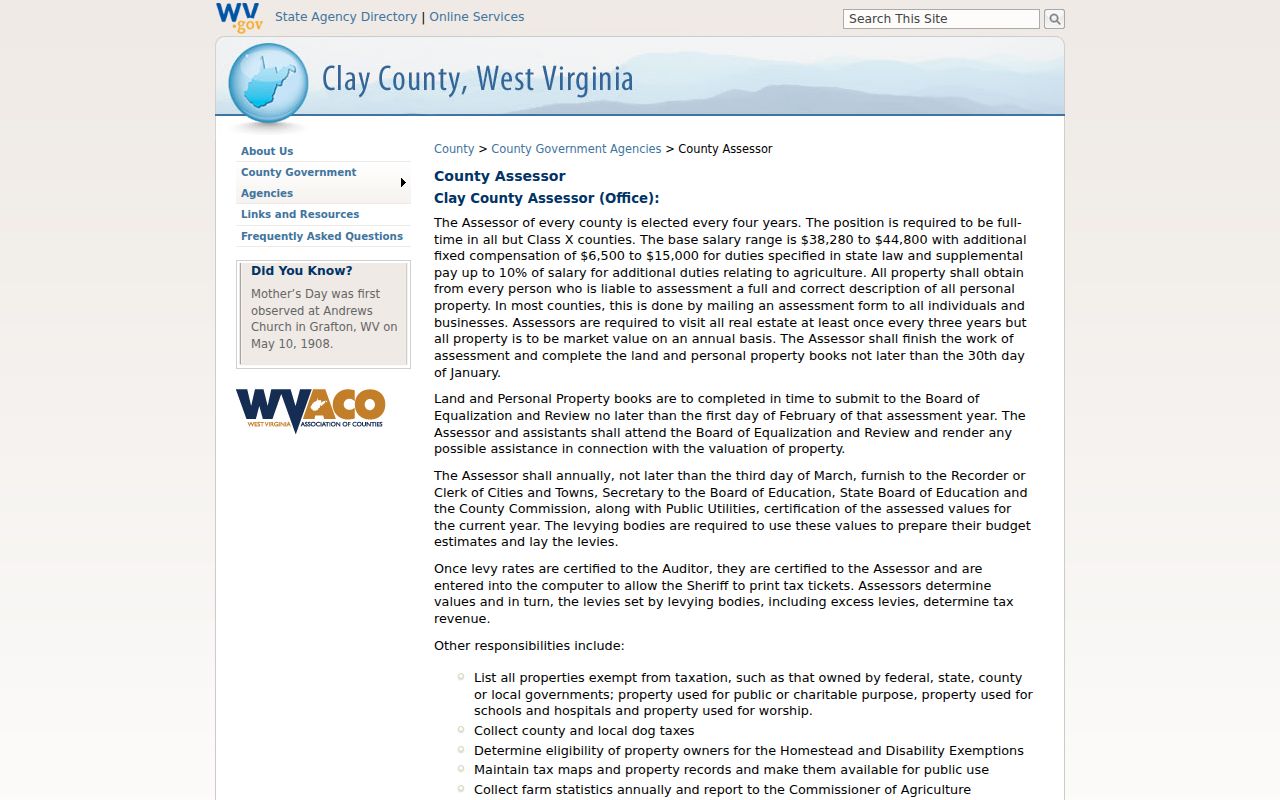
The state viewer refreshes parcel data on a yearly schedule. The map and the newest deed may not change together. Keep the tax year and your lookup date with any value comparison.
Looking Up a Clay County Property Value
Search by address, owner, or the complete parcel identifier. Rural tracts may call for district and map information, and a mailing address can differ from the property location. Before treating the displayed total as your answer, match the result's property address, acres, class, and building fields against the subject property.
- Open the statewide Property Assessment Search and enter a Clay County address, owner, or parcel reference.
- Confirm the county, district, map and parcel, property class, acres, and land/building/total fields.
- Record the tax year and ask the Assessor if the posted roll or a recent change needs explanation.
- Use the County Clerk's deed record to check a sale reference or the history of a transfer.
- Assessed value
- The amount used in the assessment process after applying the state's assessment ratio to appraised value.
- Appraised value
- The Assessor's estimate of market value used as a base for assessment.
- Level of assessment
- The relationship between the assessed amount and the appraised amount; the general ratio described by the county is 60 percent.
Property Classes and Taxable Value
Class and tax-class fields control how an assessment is categorized. A change in use, ownership, or an exemption can shift a taxable bill without touching the map geometry. Use, ownership, or exemption changes matter. They can shift a taxable bill without touching the map geometry. West Virginia offers a homestead exemption process for eligible residents. Confirm the local form with the Assessor. Confirm the filing deadline and current eligibility there too, rather than an old form or another county's instructions. When you compare values across parcels, hold the class and tax year constant. A residential home, vacant lot, commercial building, and farm-use parcel carry different assessment characteristics. Per-acre comparisons mislead when road access, terrain, buildings, utilities, or legal access differ.
Reviewing a Clay County Assessment
When an assessment looks inconsistent with the land or building, gather the parcel identifier, tax year, and deed or survey references. Add photographs and notes on improvements or damage. Then contact the Assessor. Ask how to submit corrected information. Ask which review steps apply to the current tax year. The office publishes no current appeal form or deadline. Verify that schedule directly rather than relying on last year's calendar. For an active tax matter, remember that assessment review and tax payment are separate. The Sheriff serves as county treasurer and tax collector. Direct questions about a ticket, balance, delinquency, payment history, or tax-sale status there. The assessment value alone never shows what is owed.
What a Clay County Assessor Value Is Not
The assessor's appraised and assessed values exist for public taxation. This is not a private appraisal. It does not serve a sale, mortgage, insurance claim, or estate. The annual roll can lag a fast-moving market. It can also lag a recent renovation or a newly found defect. It may also hold information that differs from how a buyer sees the property's condition. A licensed appraiser can inspect the property and prepare an opinion for a stated purpose.
Value versus price. An assessment is not a guaranteed selling price. For a sale, loan, or insurance decision, obtain the professional valuation appropriate to that purpose.