
Tracing Former Owners of a Clay County Property
Clay County's land-record trail begins in 1858. The Clay County Clerk holds current instruments. Older deed books and indexes survive in historical collections at the State Archives and the West Virginia University Regional History Center. Neither repository replaces the office record. The county publishes no countywide online deed index with a stated cutoff date, so ask the Clerk about current access before assuming a specific year is searchable online.
| Source | Years It Covers | Where Held | What It Shows |
|---|---|---|---|
| County Clerk deed books and index | Recorded deeds; ask Clerk about current span and format | Clay County Clerk, 246 Main Street, Clay | Transfers, grantor and grantee names, legal descriptions |
| State Archives deed indexes | 1858-1968 finding-aid range | West Virginia State Archives | Historical name and deed references |
| WVU deed-book microfilm | Early books, including Books 1-5 from 1858 through 1892 | WVU Regional History Center finding aid | Original recorded instruments on microfilm |
| Local newspaper and family collections | Dates depend on collection and issue | Clay County Library and Genealogical Society | Context for obituaries, family names, and local history |
Start with the County Clerk whenever a transfer is recent. Ask to search the current grantor and grantee index. Then request the instrument that matches your parcel. Older deeds take a different path. The State Archives finding aid covers an 1858-1968 index range. The WVU finding aid lists deed-book films that can be viewed. Books 1 and 2 run from 1858 through 1877, while later early books reach 1892. One caution applies here. A finding aid or a reel of microfilm is not the same as a scanned image you can open online. Confirm each repository's current access and copying arrangements before you plan a visit.
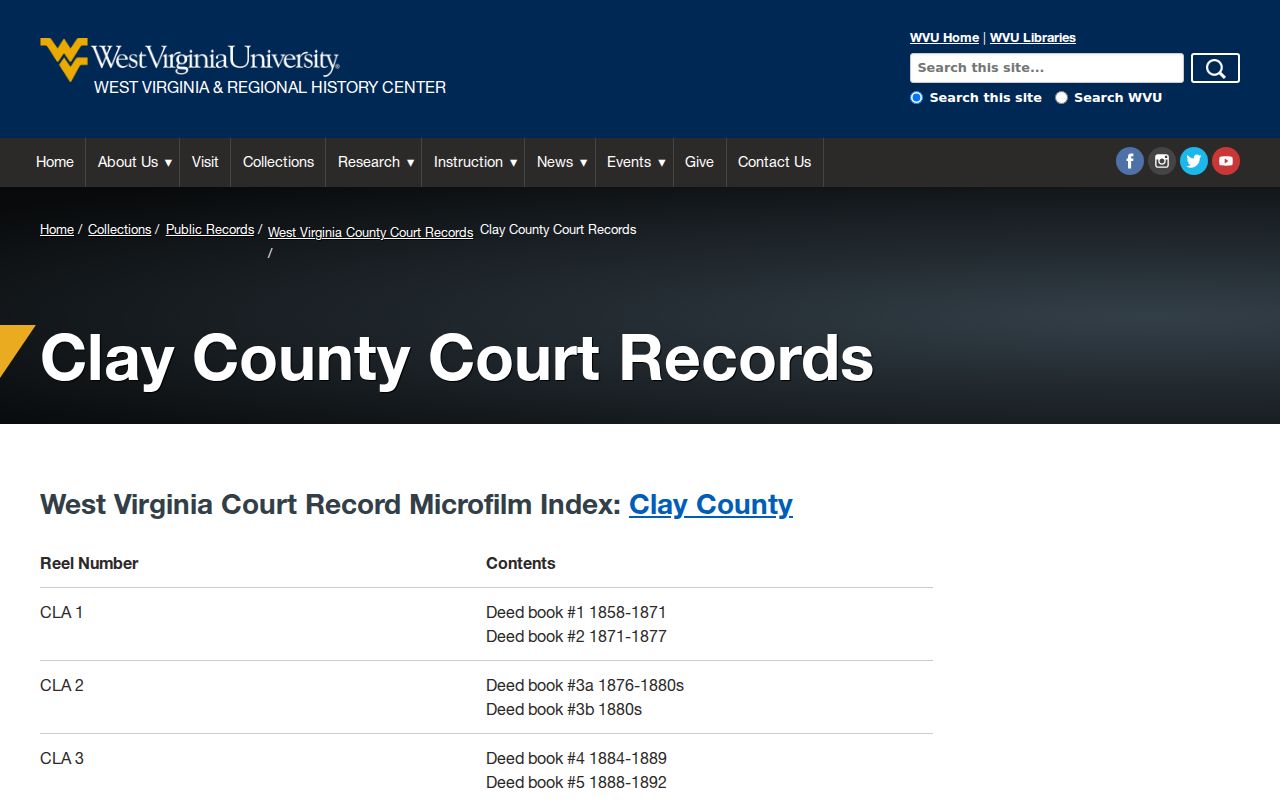
The West Virginia State Archives finding aid describes the Clay County index. It also covers related tax material.
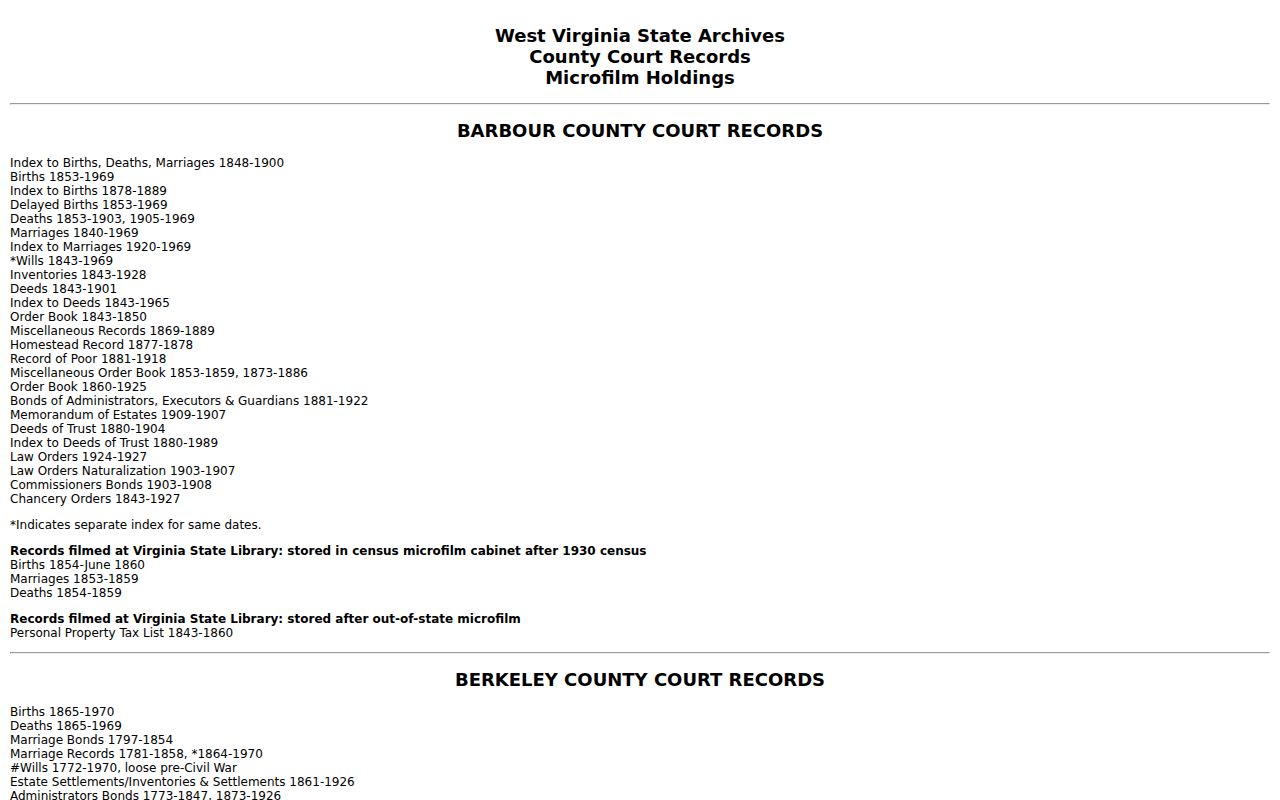
WVU's county court records finding aid lists Clay County deed-book films.
Clay County Deed Index Digitization Project
Historical grantor and grantee index pages for Clay County have been digitized off-site. The project's target window is spring or summer 2026. That window is a goal, not proof of live access. Ask the Clerk what has actually become available and how search access works, whether in the office, by request, or through another service. A digitized name index only points to an instrument. Verify the book, page, date, and legal description in the deed itself. Older handwritten indexes abbreviate names. Record spelling variants and initials as you go. Inconsistent forms are common in the early books.
Following the Clay County Grantor and Grantee Chain
Work backward from a known deed or the current owner of record. The grantee receives the land. The grantor conveys it. Once a deed identifies the prior grantor, search that same name as grantee in the earlier record, then repeat the step for each generation. West Virginia law requires general deed indexes with grantor and grantee names. Both sides of every transfer open a search path.
- Find the current assessment entry and copy the complete parcel ID, owner spelling, and any deed-book reference.
- Locate the deed naming the current owner as grantee and transcribe the prior grantor, date, book, and page.
- Search the prior grantor as grantee to find the deed by which that party acquired the land.
- Compare the legal descriptions and note when the tract changes through a partial conveyance, inheritance, or parcel split.
A deed may convey only part of a tract or point to a plat by book and page. Follow the land, not just the names. A name-only chain can jump to another tract entirely. Keep a separate chain for each legal tract and note every time the description changes.
Walking the Clay County Deed Chain Backward
For each transfer, note the instrument type, execution and recording dates, grantor, grantee, book and page, and a short transcription of the legal description. The signing date can differ from the recording date. Old documents rarely match a current street address. Searching by address often fails for early deeds. Instead, carry the names and land description from the deed itself backward through the chain.
- Find the latest recorded deed for the present owner as grantee.
- Read the grantor and description; identify the land conveyed and any referenced plat.
- Search that grantor as a grantee in the prior instrument and note the preceding owner.
- When the clerk index or online material no longer covers the year, continue with the relevant historic index or deed book.
- Grantor and grantee
- The parties conveying and receiving the interest described by the deed.
- Chain of title
- The sequence of recorded instruments through which a tract passed.
- Legal description
- The written land description that identifies the conveyed tract, often more useful than a modern street address for older deeds.
Older Clay County Places and Property Names
Old records may call the county seat Marshall, Henry, Clay Court House, or simply Clay. The town incorporated in 1895. Its official name changed in 1927 to match the postal designation. A deed or directory can therefore carry a historic community name that differs from a current address. Modern landmarks like State Route 16 and Main Street help orient a location. They cannot replace the instrument's description. Search the old form and its later variants. Compare district, adjoining owners, watercourses, and deed calls. The local library holds town history and newspaper context. The deed and the plat remain the controlling record of how the land was conveyed.
Clay County Family and Newspaper Sources
Deed records prove transfers, but local collections help interpret the names and dates. The Clay County Library at 614 Main Street provides local resources. It also offers the Clay Free Press. Its services list copying and scanning options. The Clay County Genealogical Society reports more than 2,000 books. Family files number about 6,000. It also keeps a cemetery index. Funeral-home files and obituary clippings round out the holdings. These sources can distinguish people with similar names or add context to an estate transfer. Treat family files and newspapers as leads. Confirm each ownership change in the recorded deed or probate record. Keep the exact citation, because family histories may favor a familiar name or date over the formal instrument.
How Far Back Clay County Ownership Records Go
Clay County property records reach back to 1858. That is the year official deed recording began in the county. The State Archives finding aid lists deed indexes covering 1858 through 1968, a long span for tracing an owner of record across generations. WVU's finding aid adds detail on the earliest court deed books, including Books 1 through 5, which run from 1858 to 1892. A careful title chain can still stretch deeper. Land grants and other early records may fill gaps that the county books alone cannot close, since these deed volumes do not prove an unbroken line back to the original patent. Before pushing a chain past county formation, ask an archivist or title professional which neighboring jurisdictions or land offices hold the missing parcel records.
Research limit. Historical deed research is useful for a house history or title question, but an index entry alone is not a title opinion. For a purchase, boundary or ownership dispute, have a qualified title professional or attorney review the chain.