
Clay County Tax Record Fields
Two offices hold Clay County tax records. The Assessor holds owner, parcel, appraisal, tax-class, exemption, and tax-map data. The Sheriff collects state, county, municipal, and school taxes. The Sheriff also keeps tax records and enforces delinquent accounts. Read the appraisal fields first. Then take a bill, payment, exemption, or correction question to whichever office holds that record.
| Field | What It Shows | Where |
|---|---|---|
| Assessed value | Value used to calculate the tax assessment | Clay County Assessor |
| Land, building, total appraisal | Separate appraisal amounts shown by the state result | WV Property Assessment Search |
| Property class and tax class | Classification that affects the assessment treatment | Clay County Assessor |
| Exemption record | Homestead or disability exemption status | Clay County Assessor |
| Tax ticket and payment | Bill amount, payment, or delinquency detail | Clay County Sheriff |
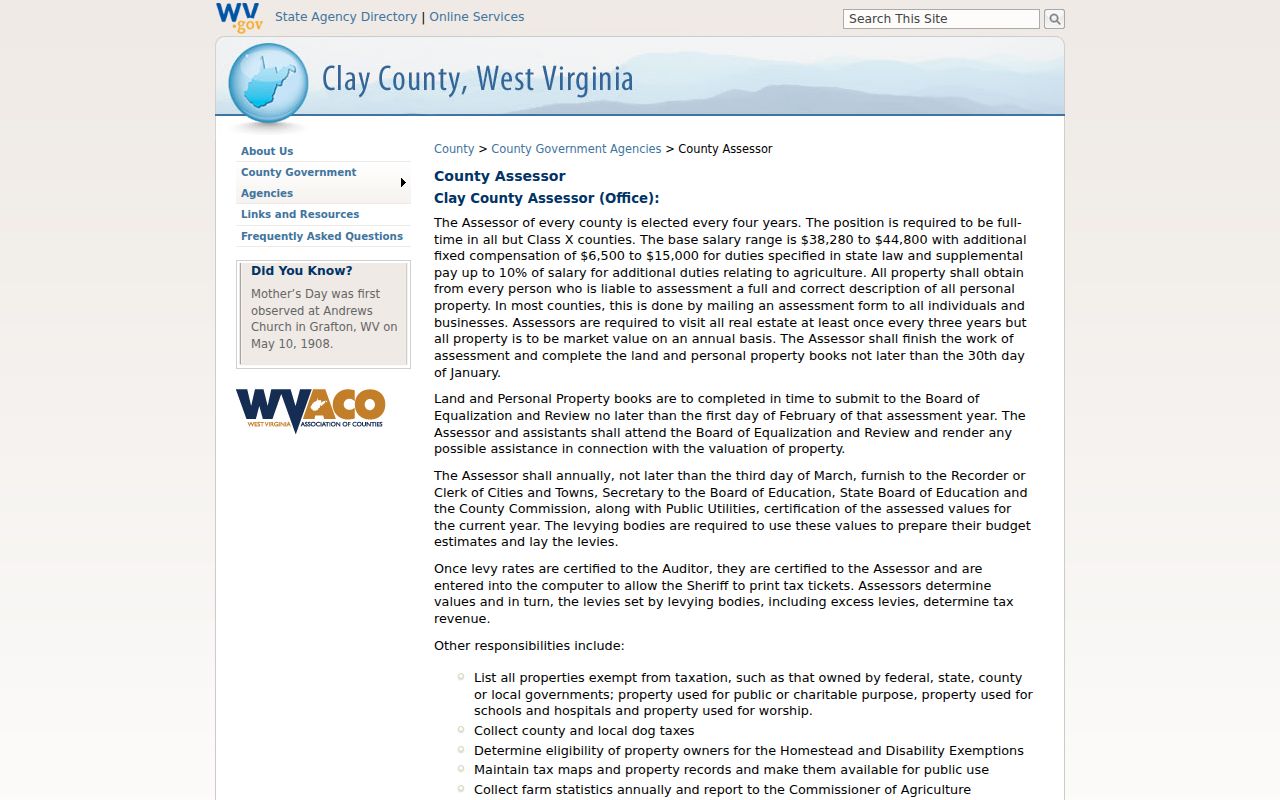
An appraisal is not the number on a tax bill. The Assessor values property at market each year. It is then assessed at 60% of that figure. A tax ticket adds collection details, and a deed shows a transfer price. Each record answers a different question about the same parcel. For the method itself, the Clay County Assessor page lays out how local assessment works.
Compare land and building amounts as separate pieces of the appraisal before judging the assessed figure. Together they explain how the total value in Clay County tax records was built.
Ask for a Clay County Tax Ticket
Clay County publishes no online tax-bill search. Current tickets, balances, delinquency, payment history, and tax-sale status all come from the Sheriff's tax office. Have the parcel ID or legal address ready. That detail lets staff find the right account fast. The state property search can locate the parcel, but it is not the county payment ledger.
- Find the parcel ID and current owner in WV Property Assessment Search.
- Call or visit the Clay County Sheriff tax office and ask for the current ticket and payment status.
- Ask whether prior-year balances, a delinquency notice, or tax-sale steps are on file.
- Check the County Clerk for Notice to Redeem and recorded delinquent-property instruments when needed.
- Assessed value
- The value used as the base for property tax, generally 60% of true or actual value.
- Tax class
- A classification for assessment treatment; Clay lists residential, municipal, rental, and vacant examples.
- Homestead exemption
- An exemption the Assessor can explain and apply to an eligible record.
- Delinquent tax
- An unpaid tax tracked and enforced by the Sheriff, with notice and redemption steps handled by county offices.
Review a Clay County Assessment
A value question starts with the Assessor. The annual valuation cycle drives the record. Pull the parcel card and compare its land and building amounts against the property description, deeded acreage, class, and recorded improvements. Cards can be wrong. Contact the Assessor, Teresa Davis, at P.O. Box 310, Clay, WV 25043, phone 304-587-4258, and ask how the current review process works.
Appeal window. The research confirms an assessment appeal and Board of Equalization/Review path, but it did not verify the current Clay County deadline or form. Ask the Assessor for the active calendar before filing; do not rely on a guessed date.
Clay County Tax Classes and Exemptions
Clay County assessment records sort parcels into tax classes. Residential, municipal, rental, and vacant property each get a label. The Assessor's page names Class II residential owner-occupied property. The full menu and each parcel's eligibility appear only on the account. Never infer a class from a street address alone.
Homestead and disability exemptions run through the Assessor. That office confirms what sits on the record. A shift in taxable consequences does not change the underlying appraisal. A credit may not be active. Ask which form, proof, and filing period apply to the parcel first.
The West Virginia assessor directory lists the Clay office contact along with the county page.
Clay County's Annual Assessment Calendar
Clay's assessment year runs on fixed dates. Real estate is visited at least once every three years, while property is valued at market each year. Assessment books close by January 30. Values are certified by March 3. The state viewer then receives the annual assessment data, so a deed or improvement recorded after the cutoff may lag behind.
Keep the tax year with every amount. Compare the assessment card against deeded acreage, physical improvements, the land/building split, and the property class. A roll change often means a new annual appraisal or data update, not a sale. Ask the Assessor when a field looks wrong. The office can order a parcel review.
Clay County's Delinquent Tax Trail
Delinquent tools live at the state level. The Property Viewer carries a Delinquent Lands layer updated weekly, and the State Auditor's Delinquent Land Database tracks land nonentered to the state, sold for delinquent taxes, and redeemed. The viewer FAQ allows about 18 months to redeem before auction, but a parcel's own notice and timeline control the outcome, so confirm the current period with the Sheriff or County Clerk.
The Sheriff collects and enforces. The County Clerk sends the Notice to Redeem, handles publication and redemption paperwork, and records delinquent-property deeds. A tax map layer is only a lead. Request the tax ticket and check the recorded instrument to learn whether payment, redemption, or a sale changed the parcel's status.
Map layers lag the record. Follow up before relying on one. The state viewer delinquent-land layer can flag a parcel for a closer look.
For current tax status, check with the county office itself, since map layers often lag behind the latest notice and payment record.
Clay County Sheriff's Tax Records
The Sheriff serves as Clay County's treasurer and tax collector, gathering state, county, municipal, and school taxes and maintaining the related records. Its official page lists the duties. Clay publishes no online tax-bill interface, so a phone or counter request is the route for a current ticket, balance, payment history, delinquency, or tax-sale status.
When a tax question follows a property search, give the Sheriff the parcel reference and tax year. Ask whether the account is paid. Ask whether prior years remain due. Ask whether a notice or redemption step is active. If the account ties to a delinquent-land notice, the Clerk may hold the recorded follow-up instrument.
The Sheriff's tax page shows the office's collection role. Start there for any bill question.
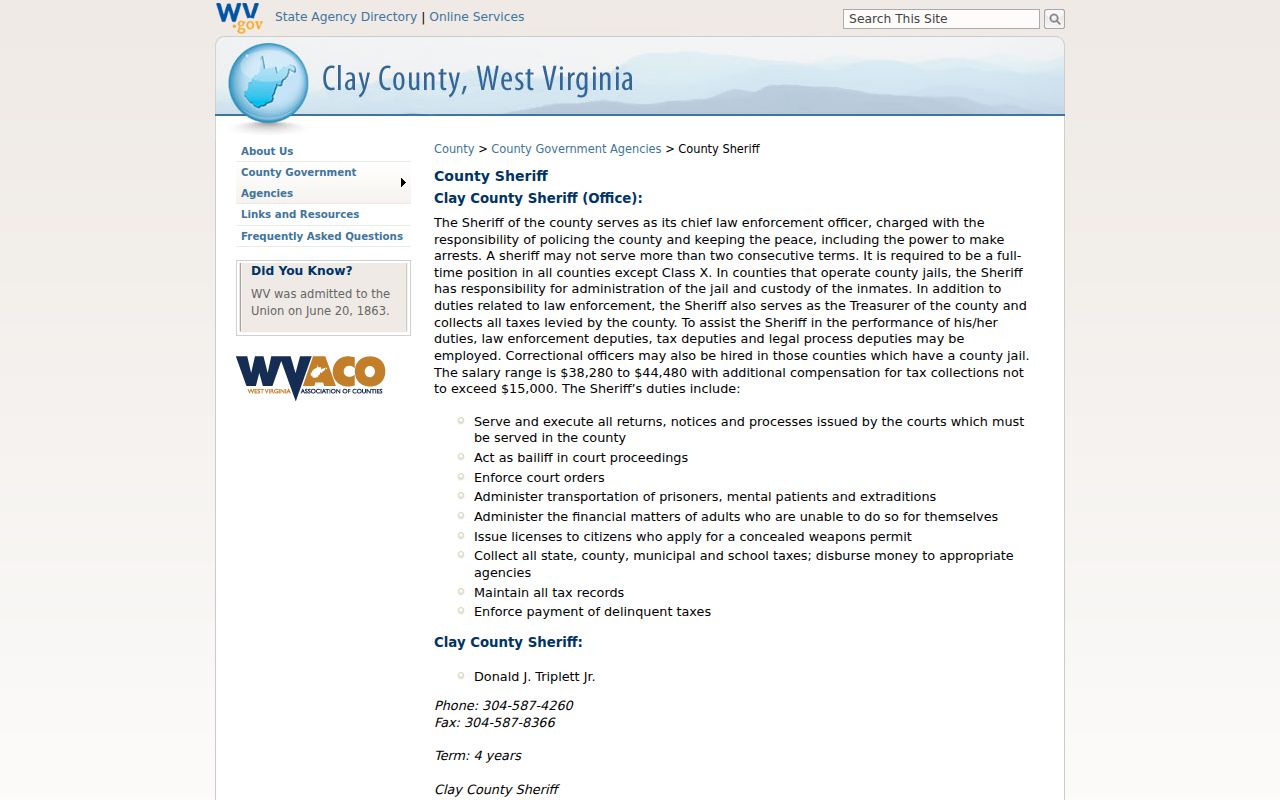
The tax office can confirm a balance that the free assessment map cannot show.
Sale Price and Clay County Tax Value
A property inquiry can turn up three different figures. These include the Assessor's full appraisal and the assessed value used to compute the tax. A sale or consideration amount from a transfer is the third. The local method multiplies appraised value by 60% to get the assessed figure. The Sheriff's bill is a collection record, not a value opinion. None of these substitutes for a professional appraisal of what a property would fetch today.
The WV Property Assessment result lists land, building, and total appraisal fields. Its appraisal and sales view also offers sale date and price filters. A sample query run statewide returned no Clay-specific parcel. Treat any transfer amount as a clue. Check it against the deed and recording details before calling it market value. The sample result table shows the appraisal columns the statewide search returns.
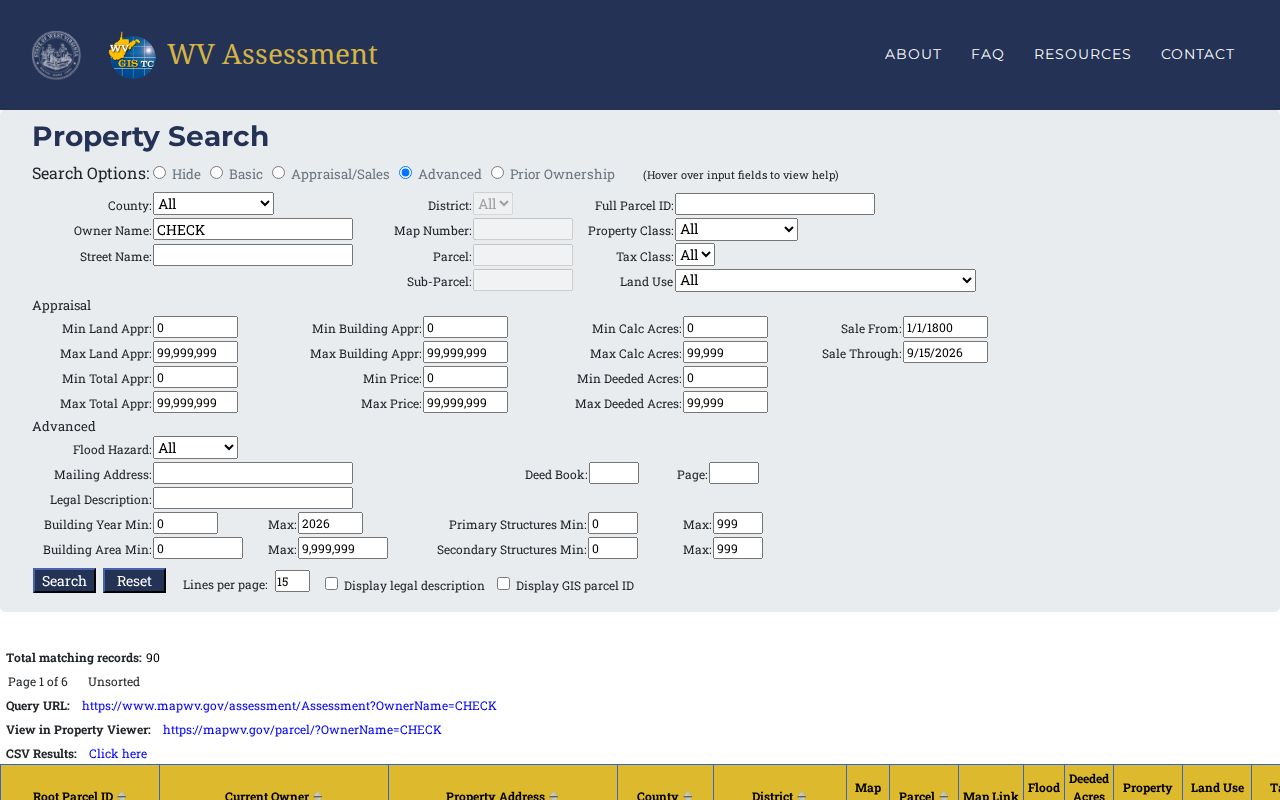
Match like fields and tax years when comparing Clay County figures, and never read a total appraisal as a sale price.